Synopsis
There are different types
of prenatal testing that can be done to evaluate the chance of a fetus having
Down syndrome or determine the diagnosis of Down syndrome.
A screening
test establishes the chance of a fetus having Down syndrome. It does not provide a definite diagnosis. A diagnostic test studies the chromosomes from
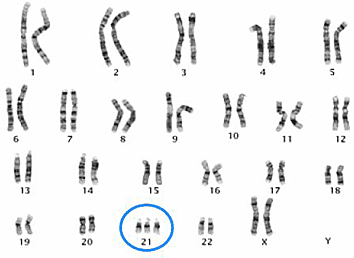
the fetus. If there are three copies (trisomy)
of chromosome 21, then the fetus has Down syndrome.
The American College of
Obstetricians & Gynecologists (ACOG) currently recommends screening all
pregnancies for fetal chromosomal anomalies, including Down syndrome (trisomy
21)
In formulating the ACOG
Guidelines, the mere existence of fetuses with trisomy 21 is more likely to be
considered diminished or devalued, thereby jeopardizing the protections customarily
afforded to any fetus or potential person.
The ACOG Guidelines make
only cursory mention of other detectable chromosomal conditions, rather it clearly
and preferentially singles out fetuses with trisomy 21 for early diagnosis.
The reasons for 1st-trimester
screening in the general population, as a medically necessary standard-of-care
procedure, are not well justified.
NDSC Recommendations
Improve the regulation of
informed consent and disclosure of information regarding prenatal screening and
diagnostic testing for all women
Enhance training about
Down syndrome for Genetic counselors, Obstetricians, Pediatricians and students
in training.
Educate and support
pregnant women and couples with a positive screen or diagnosis for trisomy 21
Monitor statistics
regarding termination and non-termination rates for all fetuses with
chromosomal anomalies, including trisomy 21.
New techniques
developed during the past few decades ñ including amniocentesis, chorionic
villus sampling, ultrasound examinations, and maternal serum testing ñ have
revolutionized prenatal screening and intrauterine diagnosis of genetic and
chromosome disorders. Since the
introduction of these procedures, physicians and genetic counselors have been
able to provide earlier more accurate information to many prospective parents
regarding the genetic outcome of their particular pregnancy. Thus, instead of discussing general
probabilities and risks, prenatal screening and diagnostic testing permits
parents to know whether their fetus does or does not have a detectable* genetic
condition or chromosome disorder such as trisomy 21 (Down syndrome)
Advances in
prenatal testing of genetic disorders have been accompanied by a broad-ranging
set of moral and ethical concerns [1] [2] [3] unresolved questions about
how this testing is conducted and regulated, the accuracy of information
provided to expectant parents, the qualifications of the presenter and
opportunities for unbiased discussion [4]. Recent recommendations by the American College of Obstetricians & Gynecologists (ACOG), which call for screening
all pregnant women, have galvanized concerns that mass public-health screening
programs, designed to detect chromosomal conditions including trisomy 21 early
in the 1st trimester, will become the ìstandard of careî for management
of all pregnancies. Throughout the developed
world, in collaboration between government-sponsored research and nationalized
healthcare systems, mass-screening programs are being promoted in part to
reduce the financial burden to society of supporting persons with special
healthcare and educational needs [5]. Following decades of
government-funded studies by our National Institutes of Health [6] to university-based medical research
centers [7], we in the U.S. have heard the
call for mass-screening of all pregnancies [8],
justified in the name of cost-effectiveness [9] [10], apparently with little public
discussion.
Diagnostic Tests
Techniques available for
prenatal diagnosis of Down syndrome include amniocentesis, chorionic villus
sampling, chromosome analysis and fluorescent in situ hybridization Table II.
Amniocentesis looks at the babyís
chromosomes from a small amount of amniotic fluid. Amniocentesis poses inherent risks such as
miscarriage (.05%), injury to the fetus, and maternal infection. In general, however, the procedure is
relatively safe. A complete chromosome
analysis (karyotype) takes several weeks to perform.
Chorionic villus sampling (CVS) became
available in the early and mid-1980s.
During CVS, a piece of placental tissue is obtained either vaginally or
through the abdominal wall, usually during the eighth to twelfth week of
pregnancy. The cells from the placental
tissue are then used for chromosome analysis.
It can be performed much earlier in pregnancy, and chromosome studies
can be performed immediately, yielding much quicker test results. Studies so far have shown that the miscarriage
risk (1%), associated with this procedure is slightly greater than that of
amniocentesis.
A technique called fluorescent in situ hybridization (FISH) allows rapid
identification (48-72 hrs) of some genetic and chromosome conditions. This can be done on samples obtained by CVS,
amniocentesis, or on a blood sample.
Using the FISH procedure, DNA is labeled with fluorescent molecules that
bind to a specific region on the target chromosome and after staining can be
viewed under a fluorescence microscope.
With chromosome-specific probes, a specialist quickly can determine the
presence of an extra chromosome 21; instead of detecting the typical two
signals (one for each chromosome 21), three signals will be observed,
indicating that the fetus has Down syndrome.
TABLE I Summary of Prenatal Screening Methods
|
SCREENING TEST
|
TRIMESTER
|
BIOMARKERS
|
DETECTION RATE
|
|
Fetal sonogram
|
1ST
|
NT
|
65-70%
|
|
Combined screen
|
1ST
|
NT & PAPP-A or β-HCG
|
82-87%
|
|
|
|
|
|
|
Triple test
|
2nd
|
AFP, β-HCG & uE3
|
69%
|
|
Quadruple test
|
2nd
|
AFP, β-HCG, uE3 & Inhibin-A
|
81%
|
|
|
|
|
|
|
Integrated
|
1st & 2nd
|
NT, PAPP-A & Quadruple test
|
94-96%
|
|
Serum Integrated
|
1st & 2nd
|
PAPP-A & Quadruple test
|
85-88%
|
|
Stepwise sequential
|
1st & 2nd
|
1st Combined screen & diagnostic test
(amniocentesis or CVS) OR
1st Combined screen & 2nd
triple or quadruple screen
|
95%
|
From: FASTER
Research Consortium, New England Journal of Medicine 353(19):2001-2011
(2005) and ACOG Practice Bulletin Number 77 Obstetrics & Gynecology
109(1):217-227 (2007)
TABLE II Summary
of Prenatal Diagnostic Methods
|
DIAGNOSTIC TEST
|
TRIMESTER
|
BIOMARKERS
|
DETECTION RATE
|
MISCARRIAGE RISK
|
|
Chorionic villus sampling
|
1st (weeks 8 -12)
|
Chromosome analysis
(karyotype) or FISH
|
> 99%
|
1%
|
|
Amniocentesis
|
2nd (weeks 14-18)
|
Chromosome analysis
(karyotype) or FISH
|
> 99%
|
.05%
|
A SYNOPSIS OF ACOG PRACTICE
BULLETIN #77
Screening for fetal
chromosomal abnormalities [8]
ìIn the past decade, numerous markers and strategies
for Down syndrome screening have been developed. Algorithims that combine
ultrasound and serum markers in the 1st and 2nd
trimesters have been evaluated. Furthermore, the practice of using age cutoffs
to determine whether women should be offered screening or invasive diagnostic
testing has been challenged. The purpose of this document is to 1) present and
evaluate the best available evidence for the use of ultrasonographic and serum
markers for selected aneuploidy screening in pregnancy and 2) offer practical
recommendations for implementing Down syndrome screening in practice.î
Glossary of terms:
Aneuploidy, too
many or too few chromosomes
Analytes, serum
markers
Congenital anomaly,
anatomical abnormality
Fetal echocardiogram,
ultrasound of the fetal heart
Karyotype,
chromosome analysis
Ultrasound, fetal
sonogram
SUMMARY OF ACOG PRACTICE
BULLETIN #77
Recommendations &
Conclusions
based on good and consistent scientific
evidence (Level A)
- First trimester screening using both
nuchal translucency measurement and biochemical markers is an effective
screening test for Down syndrome in the general population. At the same
false positive rates, this screening strategy results in a higher Down
syndrome detection rate than does the 2nd-trimester maternal
serum triple screen and is comparable to the quadruple screen
- Measurement of nuchal translucency
alone is less effective for 1st-trimester screening than is the
combined test (NT measurement & biochemical markers)
- Women found to have increased risk of
aneuploidy with 1st-trimester screening should be offered
genetic counseling and the option of CVS or 2nd-trimester
amniocentesis.
- Specific training, standardization, use
of appropriate ultrasound equipment, and ongoing quality assessment are
important to achieve optimal nuchal translucency measurement and Down
syndrome risk assessment, and this procedure should be limited to centers
and individuals meeting these criteria.
- Neural tube defect screening should be
offered in the 2nd-trimester to women who elect only 1st-trimester
screening for aneuploidy.
Recommendations &
Conclusions
based on limited or inconsistent scientific
evidence (Level B)
- Screening
and invasive diagnostic testing for aneuploidy should be available to all
women who present for prenatal care before 20 weeks of gestation
regardless of maternal age. Women should be counseled regarding the
differences between screening and invasive diagnostic testing.
- Integrated 1st- and 2nd-trimester
screening is more sensitive with lower false-positive rates than 1st-trimester
screening alone
- Serum integrated screening is a useful
option in pregnancies where nuchal translucency measurement is not
available or cannot be obtained
- An abnormal finding on 2nd-trimester
ultrasound examination identifying a major congenital anomaly
significantly increases the risk of aneuploidy and warrants further
counseling and the offer of a diagnostic procedure
- Patients who have a fetal nuchal
translucency measurement of 3.5mm or higher, in the 1st-trimester,
despite a negative aneuploidy screen, or normal fetal chromosomes should
be offered a targeted ultrasound examination, fetal echocardiogram, or
both
- Down syndrome risk assessment in
multiple gestation using 1st- or 2nd-trimester serum
analytes is less accurate than in singleton pregnancies
- First-trimester nuchal translucency
screening for Down syndrome is feasible in twin or triplet gestation but
has lower sensitivity than 1st-trimester screening in singleton
pregnancies
Recommended performance
measure for practicing Obstetricians
Percentage of
patients with documentation of
discussion regarding Down syndrome screening
The National down syndrome
congress RESPONDS TO
THE ACOG recommendations
Human Principles
- We do not agree in principle, that ACOG, is justified
in formulating Clinical Management Guidelines, on behalf of all practicing
Obstetricians, which so blatantly contributes to the devaluation of life in
fetuses with chromosomal anomalies including trisomy 21.
- In formulating the ACOG Guidelines, the mere
existence of fetuses, potential persons and living individuals with
trisomy 21 is more likely to be considered diminished or devalued, thereby
jeopardizing the protections customarily afforded to any fetus, potential
person or living individual.
- Unless specifically requested by a pregnant woman or
expectant parents, Obstetricians are not justified in rendering any
opinion regarding the ìpotential valueî of the life that has been created.
Discrimination
The ACOG Clinical Management Guidelines, despite
its title ìScreening for Fetal Chromosomal Abnormalitiesî makes only cursory
mention of other detectable chromosomal conditions (such as, other autosomal or
sex chromosome anomalies, large deletions or duplications, and chromosomal
mosacism), and appears to single out fetuses with trisomy 21 for early
diagnosis. [The reason(s) for emphasis on trisomy 21 is not entirely clear, but
may reflect the relatively high frequency and increased likelihood of
survival-to-term for fetuses with trisomy 21, compared to other chromosomal
conditions [11]; Obstetrician concerns about
wrongful life litigation [12]; and projected cost-savings
to ìsocietyî when the birth-rate of babies with special healthcare and
educational needs is reduced ]. Regardless of intent, the resultant Clinical
Management Guidelines clearly and preferentially targets fetuses with trisomy
21 for early diagnosis.
- The primary reasons for 1st-trimester
screening in the general population, as a medically necessary standard-of-care
procedure, are not well justified. One interpretation is that the purpose
of 1st-trimester screening is to encourage earlier diagnostic
testing in screen-positive, ìhigh riskî pregnancies, in order to
facilitate early termination when trisomy 21 or other chromosomal
anomalies exist [13] [14]. Other reasons for prenatal diagnosis,
such as parent education, hospital selection and delivery management, do
not require testing during the 1st trimester.
Informed Consent
- Requirements for written, informed consent and any
action resulting from refusal to consent to screening are not addressed,
nor are safeguards against directive-counseling or coercion guaranteed.
All medical screening and diagnostic tests need to be fully explained to
patients, who should be provided the opportunity to decline or give their
informed written consent prior to testing. If patients decline certain
tests, physicians and medical personnel should respect the individualís
wishes and not overtly or covertly pressure women to undergo prenatal
screening or diagnostic testing.
Training
The competency and training of medical personnel
and guidelines for non-directive counseling, regarding the diagnosis of fetuses
with trisomy 21 are not discussed. Obstetricians often lack the training and
clinical experience to convey the meaning of Down syndrome to expectant mothers
or couples. Studies by Skotko [4] note that many Obstetricians
are inadequately prepared to explain a diagnosis of trisomy 21, often using
overtly negative language or out-of-date information. Training standards to
insure the provision of accurate, balanced information and the source of that
information have not been established.
Performance Measures
The proposed ACOG performance measure percentage of patients with
documentation of discussion regarding Down syndrome screening should
already be at 100%, as a part of standard medical practice, and is not an
appropriate measure given the intensity of service being recommended. A more
appropriate performance measure would be the impact of implementing the ACOG recommendations
on the termination rate of trisomy 21 and non-affected fetuses.
NDSC Recommendations
- Improve the regulation of informed consent and disclosure
of information regarding prenatal screening and diagnostic testing for all
pregnant women.
- Improve training about Down syndrome for Genetic
counselors, Obstetricians, Pediatricians and students in training.
- Educate and support pregnant women or couples with a
positive screen or diagnosis for trisomy 21.
- Monitor
statistics regarding termination and non-termination rates for all fetuses
with chromosomal anomalies, including trisomy 21.
References
1. Pueschel,
S., Ethical issues pertaining to prenatal
diagnosis of Down syndrome, in Down
syndrome: A review of current knowledge, J. Rondal and L. Nadel, Editors.
1999, Whorr Publishers Ltd: London. p. 170-177.
2. Chervenak, F., L. McCullough, and S.
Chassen, Clinical implications of the
ethics of informed consent for the first-trimester risk assessment for trisomy
21. Seminars in Perinatology, 2005. 29:
p. 277-279.
3. Glover, N.M. and S.J. Glover, Ethical and legal issues regarding selective
abortion of fetuses with Down syndrome. Mental Retardation, 1996. 34(4): p. 207-214.
4. Skotko, B., Prenatally diagnosed Down syndrome: Mothers who continue their
pregnancies evaluate their health care providers. American Journal of
Obstetrics & Gynecology, 2005. 192:
p. 670-677.
5. Vassy, C., From a genetic innovation to mass health programmes: The diffusion of Down's Syndrome prenatal
screening and diagnostic techniques in France. Social Science &
Medicine, 2006. 63: p. 2041-2051.
6. Reddy, U.M. and M.T. Mennuti, Incorporating first-trimester Down syndrome
studies into prenatal screening. Obstetrics & Gynecology, 2006. 107(1): p. 167-173.
7. Malone, F.D., N.J. Wald, and M.E.
D'Alton, First-trimester or
second-trimester screening, or both, for Down's syndrome. The New England
Journal of Medicine, 2005. 353(19):
p. 2001-2011.
8. Bahado-Singh, R. and D. Driscoll, ACOG Practice Bulletin 77, Clinical Management
Guidelines for Obstetrician-Gynecologists: Screening for fetal chromosomal
abnormalities. Obstetrics & Gynecology, 2007. 109(1): p. 217-227.
9. Odibo, A.O., D.M. Stamilio, and D.B.
Nelson, A cost-effectiveness analysis of
prenatal screening strategies for Down syndrome. Obstetrics &
Gynecology, 2005. 106(3): p.
562-568.
10. Macones, G.A. and A. Odibo, First trimester screening: Economic
implications. Seminars In Perinatology, 2005. 29: p. 263-266.
11. Canfield, M.A., M.A. Honein, and N.
Yuskiv, National estimates and
race/ethnic-specific variation of selected birth defects in the united states,
1999-2001. Birth Defects Research (Part A): Clinical and Molecular
Teratology, 2006. 76: p. 747-756.
12. ACOG
Survey on professional liability results. 2007, ACOG website http://www.acog.org/departments/dept_notice.cfm?recno=4&bulletin=3963.
13. Mansfield, C., S. Hopfer, and T. Marteau,
Termination rates after prenatal
diagnosis of Down syndrome, spina bifida, anencephaly, and Turner and
Klinefelter syndromes: A systematic literature review. Prenatal Diagnosis,
1999. 19: p. 808-812.
14. Siffel, C., A. Correa, and J. Cragan, Prenatal diagnosis, pregnancy terminations
and prevalence of Down syndrome in Atlanta. Birth Defects Research (Part
A): Clinical and Molecular Teratology, 2004. 70: p. 565-571.